Pro-Worker AI: U.S. Research and the Strategic Use of AI
The current AI debate is often reduced to efficiency: faster, cheaper, more automated. Yet another perspective is gaining momentum — AI as a tool to strengthen people rather than replace them. Research in the United States, including work from Harvard Business School (Working Paper: Randazzo et al., 2025) and the MIT (Massachusetts Institute of Technology) ecosystem, refers to this approach as Pro-Worker AI: systems designed to empower skilled professionals instead of displacing them.
For companies in Germany and across Europe, this raises a strategic question:
Do we develop AI primarily as a cost lever — or as a capability lever?
What “Pro-Worker AI” Really Means
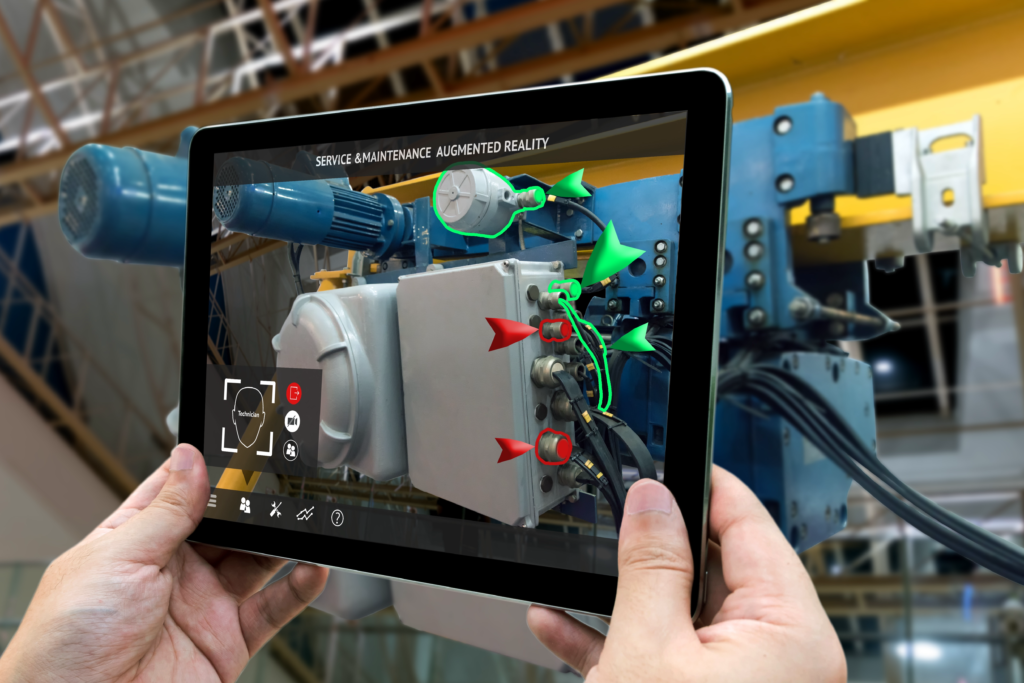
Imagine an electrician facing complex system failures with access to AI that analyzes thousands of past cases, identifies rare fault patterns, and provides targeted recommendations. The electrician is not replaced — but becomes faster, more precise, and more confident.
This captures the essence of Pro-Worker AI:
AI expands human capability instead of standardizing or diminishing it.
This perspective applies across industries — from healthcare and education to technical services. The decisive factor is less the technology itself and more how organizations design and govern its use.
Why Many Companies Are Moving in the Wrong Direction
Despite the opportunities, many AI initiatives implicitly lean toward automation rather than empowerment. Several structural factors contribute to this trend.
- Vendor Business Models Many platform providers monetize scale and automation. Building employee capability is rarely central to their roadmaps. Closing this gap requires deliberate effort from the adopting organization.
- Generalist AI Instead of Domain Depth General models are impressive but often insufficient for highly contextual work. Without domain-specific data, AI remains superficial — and employees risk losing touch with their own expertise.
- The Pull Toward Artificial General Intelligence (AGI) The focus on increasingly autonomous systems shifts attention away from collaborative solutions — even though collaboration often generates the greatest economic value for companies.
Without conscious countermeasures, automation becomes the default strategy — even when it erodes long-term capabilities.
The Real Leadership Challenge: Designing AI as a Capability Strategy
Pro-Worker AI does not emerge by accident. It is the result of deliberate design decisions — technical, organizational, and cultural.
- Develop Domain-Specific, Reliable Systems AI must understand real work processes, not just generic patterns. This requires leveraging proprietary data, embedding domain logic, and aligning systems with concrete tasks.
- Design AI to Grow Skills Effective AI explains rather than simply delivers answers. It supports learning in daily work and makes decision paths transparent.
- Actively Prevent Blind Trust Interaction design becomes a strategic tool. Users should formulate their own hypotheses before AI recommendations appear. A small amount of “productive friction” can significantly improve decision quality.
- Introduce Adaptive Decision Support Not every employee requires the same level of AI assistance. Systems should adjust to experience, task complexity, and risk — similar to a digital co-pilot.
- Treat AI as a Governance Topic Pro-Worker AI requires clear guidelines, roles, and accountability. Without organizational intervention, it will not emerge naturally.
The Strategic Difference: Automation vs. Augmentation
Many organizations currently face a decisive crossroads.
Approach | Short-Term Effect | Long-Term Impact
Automation Focus | Efficiency gains | Risk of deskilling and dependency
Pro-Worker AI | Moderate productivity increase | New capability profiles and higher value creation
The economic difference often becomes visible only after several years — but then quite clearly.
Why Now Is the Right Time
A key insight from current research is that once AI systems are widely deployed, fundamental design decisions become difficult to reverse — similar to large ERP implementations.
Organizations that focus solely on automation today may build structures that later hinder innovation and learning.
Companies should therefore clarify early:
Which expertise do we want to strengthen?
Which decisions remain intentionally human?
Where should AI support — and where should it not?
The strategic decision is simple:
Do you want to reduce costs — or build capabilities?
Doing both at the same time rarely works.
For those who want to engage in further discussion:
→ On March 11, 2026, I will open our virtual IIBA Business Analysis roundtable at 19:00, focusing on:
Data Analytics as the Foundation for Using AI
→ In addition, on February 25, 2026, starting at 18:00 in Hamburg, there will be an opportunity to exchange ideas at:
AI in Everyday Work — How SMEs Use Artificial Intelligence in Practice
Everyone interested is welcome — participation is free.
Conclusion for Business Leaders
Pro-Worker AI is not idealism; it is a strategic investment in an organization’s future viability. AI can make employees more interchangeable — or more valuable. The direction is determined not by technology alone, but by design.
The central question is therefore not: How much work can AI take over?
But rather: How do we build an organization where AI makes people better — instead of redundant?