
Case Study – IT Transformation and Leadership Enablement
Initial Situation
While the company had regained operational stability, IT structures, methods, and strategic alignment no longer matched the ambitions of the business.
To support further transformation – including future topics such as AI and machine learning – IT required a reset in governance, architecture, delivery capability, and skill development.
Key Pain Points
IT not sufficiently aligned with corporate strategy
Fragmented application and data landscape
Lack of modern standards, methods, and governance
Ongoing operational issues (“burning platforms”) in quality management and IT support
No clear roadmap for modernization or leadership transition
Company
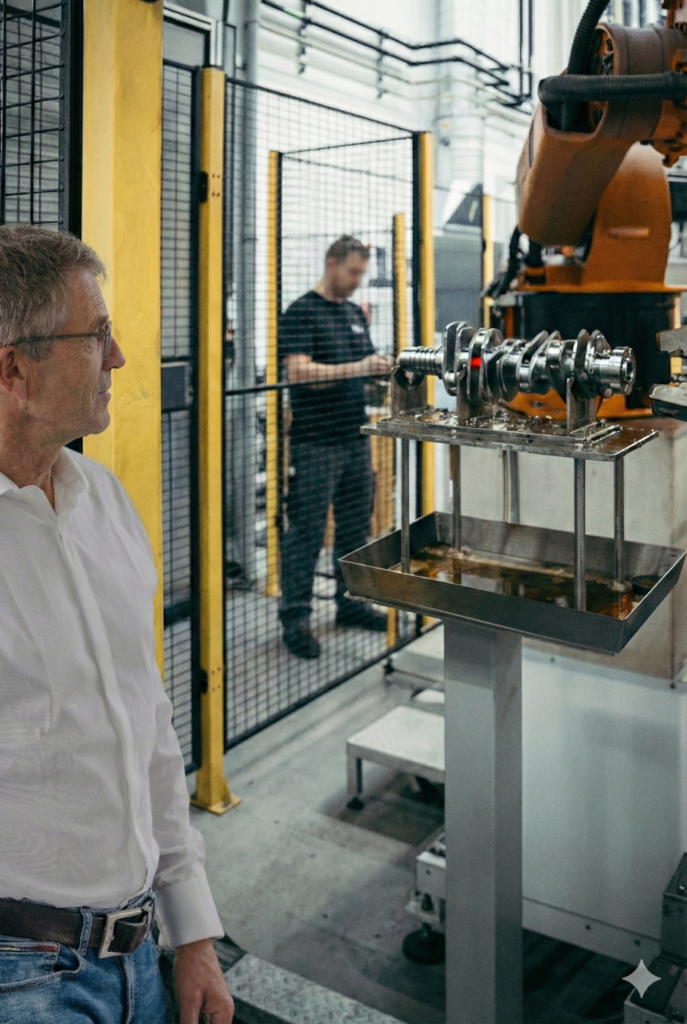
Following the successful resolution of a major corporate crisis in 2017, the company – a global market leader in large crankshaft manufacturing — had stabilized its core business of EUR 350 million with 1,200 employees and was back to a growth story.
IT, however, with 17 internal employees, 6 external resources, and an annual budget of approximately EUR 3,5 million, had not yet been repositioned as a strategic enabler.
Mandate & Objective
Alexander was engaged to transform the IT organization, establish modern structures and standards, and prepare the ground for a new CIO to lead the next phase of modernization.
Laying the foundation for a new CIO – Transformation objectives:
Reposition IT as a strategic function
Establish modern structures, standards, and delivery methods
Define a clear short- and mid-term IT strategy
Consolidate applications and data as a foundation for future innovation
Enable a structured handover to a new CIO
Transformation Approach
Creating Transparency and Shared Understanding
From stabilization to strategic enablement
Key activities included:
Analysis of the existing enterprise architecture, running initiatives, and available resources
Development of a short- and mid-term IT strategy aligned with business priorities
Initiation of first transformation measures, including:
Tendering and proof of concept for SAP S/4HANA conversion
Proof of concept for a digital personnel file based on PowerApps and SAP HCM with Fiori
Resolution of critical operational issues with hands-on approach to address the lost trust from business, particularly in quality management of the services provided and IT support
Establishment of a PMO and alignment of governance, processes, and budget planning with transformation goals
Introduction of FitSM standards and development of an IT emergency handbook
Reconfiguration of sourcing and outsourcing partnerships, selectively replacing integration partners with specialized freelancers
Design and rollout of enablement and training programs for Microsoft Teams, SharePoint, and Copilot
Results
A scalable foundation for the next transformation phase
IT organization repositioned with clear structures, standards, and governance
Transparency across architecture, projects, and budgets
Stabilization of operational hotspots and improved service reliability
First modernization initiatives successfully launched and validated via proof of concept
IT strategy aligned with long-term innovation topics such as AI and ML
A solid, well-documented foundation enabling a smooth transition to a new CIO
IT was transformed from a supporting function into a structured, future-ready platform — enabling sustainable modernization beyond the interim mandate.